Day 1Wednesday, April 23, 2025
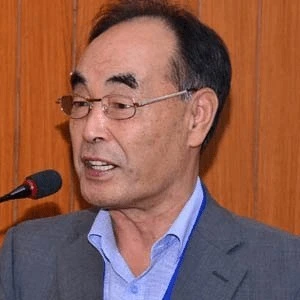
How to Overcome the Limitations Inherent in Sustainable Development
Dai Yeun Jeong, Asia Climate Change Education Center and Jeju National University, Korea, Republic ofSustainable development is the ideology and practical strategy of the present and future socio-economic development in harmony with nature. A wide range of policies and practical activities have been launched at a global, national and regional level in order to achieve sustainable development since…
View Full Abstract →
How Have We Eliminated Infection? Nanotechnology Human Clinical Studies
Thomas J Webster, Brown University, United StatesThis talk will discuss how we have used nanotechnology eliminate infections in over 30,000 humans to date. It will discuss how medical devices have been modified to have nanoscale surface features that repel bacteria while promoting tissue growth. Moreover, it will discuss how we are using…
View Full Abstract →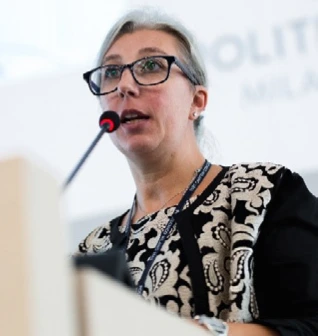
Enhanced heterogeneous Fenton degradation for liquid waste treatment
Eleonora Aneggi, University of Udine, ItalyInnovations in water technology are fundamental to finding solutions to the nowadays challenges: climate change, resource shortages, emerging contaminant, urbanization and sustainable development. Nowadays the use of conventional wastewater processes is becoming increasingly challenging mainly due…
View Full Abstract →
Advances in the Development of Alkaline Water Electrolysis Cells: A Case Study
María José Lavorante, Institution of Scientific and Technological Research for Defence (CITEDEF), ArgentinaMost of the chemicals produced today will likely remain predominant even in a low- carbon society, as projected. The chemical industry is a significant contributor to greenhouse gas emissions due to its energy-intensive processes that rely on fossil fuels and raw materials. Therefore, the…
View Full Abstract →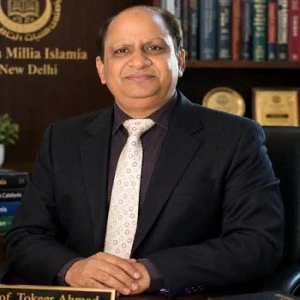
Sustainable Energy through Heterogeneous Catalysis using Advanced Material
Tokeer Ahmad, Jamia Millia Islamia, IndiaSemiconductor based photochemical and photoelectrochemical water splitting is an ultimate source of hydrogen generation as renewable green energy for tackling the ongoing fuel crisis. Carbon based materialsare ideal for overall water splitting as a result of the excellent alignment of its band…
View Full Abstract →
Digitization of Phase Diagrams of Ternary Halide Systems by Creating Their Computer Models for the Development of Catalytic Materials.
Vasily Lutsyk, Buryat State University, RussiaIn many cases the chloride ternary systems are used as the catalytic compositions. Digital twins for the isobaric chloride phase diagrams (PD)Li,M,K||Cl (M=Ce,Gd,La,Nd,Pr,U) in the form of space computer models willbe discussed by our presentation. Completed 3D model of each PD will be made in the…
View Full Abstract →
Modification of poly(2-chloro-2-propen-1-ol) with ethylenediamine towards the novel material morphology and CO2 sorption properties
Joanna Drzeżdżon, University of Gdansk, PolandCurrently, there’s been a surge in attention towards CO2 sorbents among scientists, engineers, and industry experts. CO2, as both an air pollutant and a greenhouse gas, has become a major concernfor the environment. These sorbents aren’t just for environmental cleanup—they’re also proving valuable…
View Full Abstract →
Enhancement of barrier protection of organic coatings with the incorporation of graphene oxide as a reinforcing filler
Sachin Sharma Ashok Kumar, Universiti Malaya, MalaysiaGraphene and its derivatives are new materials with unique properties which have been widely employed as a reinforcing filler material in organic coatings. The superior properties of graphene oxide (GO) have resulted it to be a promising additive in anti-corrosion coatings. Moreover, due to the…
View Full Abstract →
Examination of Certain Biomolecules That May Be Effective in Preventing Sars-Cov-2/ Covid-19 Through In-Silico Analysis: Initial Studies
Rahul Hajare, Sandip University, IndiaIn 2019, the corona virus (SARS-CoV-2) with highly contagious features caused millions of cases worldwide. Scientists now feel more pressure than ever to create a unique cure. Due to the strong spreading properties that increased the death rate, medical professionals administered Remdesivir,…
View Full Abstract →
Adsorptive removal of toxic phenol from wastewater to ensure water recycling in industry
Ashanendu Mandal, Energy Expert and International Speaker, IndiaThis research aims for adsorptive removal of phenol from wastewater by solid waste materials viz. guava tree bark, rice husk, neem leaves, activated carbon from coconut coir, rice husk ash, red mud, clarified sludge from basic oxygen furnace and activated alumina. The characterizations of the…
View Full Abstract →
Production of Renewable Aromatic Hydrocarbons from Long Chain Unsaturated Used Cooking Oil Over a Hierarchical Imidazole Supported Zeolite
Omvir Singh, Rajiv Gandhi Institute of Petroleum Technology, IndiaThe efficient and sustainable used of large spare of food waste in developing countries. The used of Used cooking oil (UCO) for different process (esterification, catalytic upgradation) is better and alternative feedstock for petrochemicals industry. The transformation of Methanol assisted…
View Full Abstract →
Low-density polyethylene (LDPE) and polyvinyl chloride microplastic removals with Fe-ZnO nanocomposite
Delia Teresa Sponza, Dokuz Eylül University, TurkeyThe rapid increase in plastic production and disposal worldwide has adversely and significantly impacted the global environment and biology. Traditional treatment methods are not appropriate for microplastics (MPs) due to their highly polymerized, stable, and complex chemical structure.…
View Full Abstract →
Towards zero-emission systems: Intelligent control of odour derived from urban solid waste management plants
J.A. Siles, University of Córdoba, SpainThe reduction of negative impacts associated to the generation of residual substances is nowadays one of the main purposes to be achieved at European and global level, so that the implementation of the best available techniques for waste managing is being promoted. In this context, it is essential…
View Full Abstract →
Dual Memory Characteristics and Crystallographic Transformations in Shape Memory Alloys
Osman Adiguzel, Firat University, TurkeyShape memory alloys take place in a class of advanced smart materials by exhibiting dual memory characteristics, shape memory effect and superelasticity in the β-phase region with chemical composition. Shape memory effect is initiated with thermomechanical processes on cooling and deformation and…
View Full Abstract →
The Mechanism of Low-Temperature Nuclear Fusion,Generalizing the Ideology of Muonic Catalysis
Mikhail Kashchenko, Ural Federal University, RussiaSemi-classically, by analogy with the Bohr model for the hydrogen molecule, the muon catalysis reaction can be interpreted as a consequence of the attraction of a pair of protons to a muon rotating in a ring orbit, the plane of which is perpendicular to the line connecting the protons. Since the…
View Full Abstract →
Day 2Thursday, April 24, 2025

Effect of the location of active acid sites on the internal and external surfaces of different zeolites and active carbons based on petroleum delayed coke over the catalytic hydrolysis of starch.
Luis F. Isernia-Trebols, Universidad de Oriente, VenezuelaThe catalytic hydrolysis of starch was studied by iodine-spectrophotometric quantification at 600 nm on activated carbons based on delayed petroleum coke and different zeolites, using starch concentrations close to 1.10-5 g/mL on approximately 0.0164 g of catalyst at 150 °C. The catalytic tests…
View Full Abstract →
Review of Research Topics for Scaling-up of Sonochemical Reactors (Sono-reactors)
Orlando Elguera, Universidade de São Paulo, BrazilThis study is aimed to review the topics of chemical engineering to take in consideration for the scaling-up of reactors, in order to perform processes based on the application of the sonochemistry at industrial level. Sonochemistry is an emergent technology, defined as chemistry made with…
View Full Abstract →
Antibody-Proteases as Translational Biomarkers, Targets andPotential Tools of the Next Step Generation to be applied forBiodesign-driven Biotech and Personalized and Precision Medical Practice
Sergey Suchkov, The Russian Academy of Natural Sciences, RussiaBiomarkers as being a part of the ligand-receptor tandems have induced an impulse to prompt the development of an upgraded concept of the targeted therapy. So, the identification, impact and implementation of diagnostic, predictive and prognostic biomarkers of the next step generation becomes the…
View Full Abstract →
Heterogeneous Catalytic Systems for Nitrogen-Based Fertilizer Production
Ali Yetgin, TorosAgri Industry and Trade Co. Inc., TurkeyThe production of nitrogen-based fertilizers constitutes a fundamental aspect of contemporary agricultural practices and global food security, historically dependent on energy-demanding methodologies such as the Haber–Bosch process. Recent innovations in heterogeneous catalytic systems have…
View Full Abstract →
Needs of Ruthenium complexes as anticancer drugs
Lazhar Hajji, Universidad de Almería, SpainAfter the discovery of the anticancer properties of cisplatin1 in the sixties by Rosenberg, a large number of metal derivatives have been synthesized and assessed as therapeutic agents for cancer treatment.2 Nevertheless, still now cisplatin and its parent analogues are among the most widely used…
View Full Abstract →
Enhanced Hydrogen Generation via Atomically Dispersed CoCu Catalysts Supported on Carbon Nanotubes for Ammonia Borane Hydrolysis
Chi-Wing Tsang, Technological and Higher Education Institute of Hong Kong, Hong KongThis study presents the synthesis and characterization of atomically dispersed CoCu active sites supported on carbon nanotubes (CNTs) for the hydrolysis of ammonia borane (AB). Addressing the challenges of hydrogen storage and release, we demonstrate that CoCu bimetallic catalysts exhibit enhanced…
View Full Abstract →
Biogeosystem Technique Methodology in Chemical-Soil-Biological Engineering
Valery P. Kalinitchenko, Institute of Fertility of Soils of South Russia, RussiaCurrent “Ecosphere – technology” conflict stems from an environmental, agricultural and chemical management outdated technological platform based on a simplified attempt to imitate natural phenomena in technology root case. A standard chemical-technological system hierarchy determines the own…
View Full Abstract →
Solution of the millennium problem concerning the Navier-Stokes equations
Alexander G. Ramm, Kansas State University, United StatesThe theory of wave scattering by many small impedance particles of arbitrary shapes is developed. The basic assumptions are: where a is the characteristic size of particles, d is the smallest distance between the neighboring particles, is the wavelength. This theory allows one to give a recipe for…
View Full Abstract →
Day 3Friday, April 25, 2025
The Day 3 program will be updated shortly
We're preparing this information. Please check back soon.